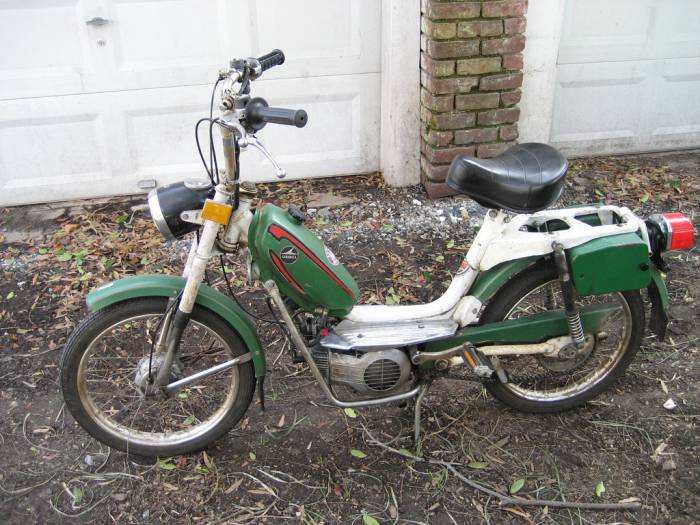
The Minarelli V1 is a horizontal, piston-ported 49cc two-stroke found under dozens of US badges — General 5-Star, Cimatti, Testi, Fantic, Yankee Peddler, and more. Stock power is modest, but the platform has a deep aftermarket: cast iron and plated kits from 55cc through 90cc, 2-shoe and 3-shoe clutches, pipes, cranks, and CDI options all share across V1 cases regardless of frame sticker.
Get the architecture right before you order parts. The V1 is single-speed chain drive with a centrifugal clutch inside the clutch bell — much closer to a Puch E50 than to a Peugeot 103 or any scooter CVT. There is no variator on a V1. The related Minarelli C2, C3, and V2 engines are the variated ones; do not apply variator or roller-weight advice here. Fuel is premix (often 50:1 on stock top ends); the clutch case takes separate gearbox oil (SAE non-detergent 30, roughly a quart). Port-timing math uses a 42 mm stroke and 85 mm connecting rod on the standard port-inducted V1 — not the 90 mm Puch E50 rod, and not the 39 mm stroke of the factory-reed V1L variant.
Build comparison at a glance
| Tier | Goal | Key parts | Realistic top speed | Budget band |
|---|---|---|---|---|
| Mild Street refresh | Reliable commuter, free gains | Stock top end, derestrict intake/exhaust, SHA jet tune, gearbox oil, sprocket check | 28–34 mph | $50–$200 |
| Mid Big-bore daily racer | Strong acceleration, still rideable | 70–75cc cast kit, port match, pipe, 15/15 SHA, 2-shoe clutch tune, optional CDI | 38–43 mph | $350–$700 |
| Wild Ported race setup | Maximum V1 potential | 75–80cc+ kit, aggressive porting, 3-shoe clutch, race pipe, full-circle crank, reed adapter or V1L case | 45–50+ mph | $800–$1,500+ |
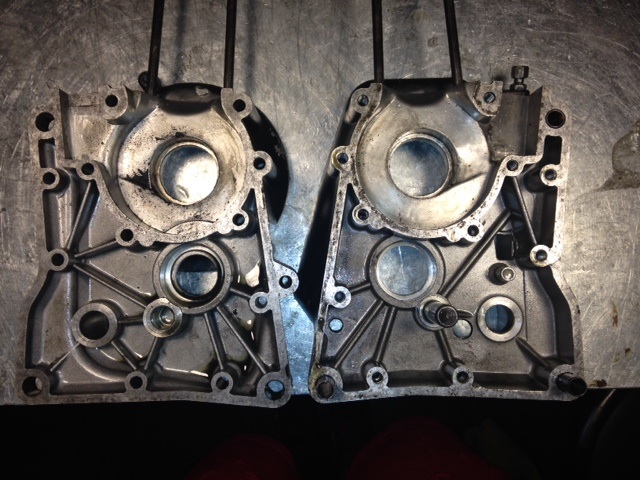
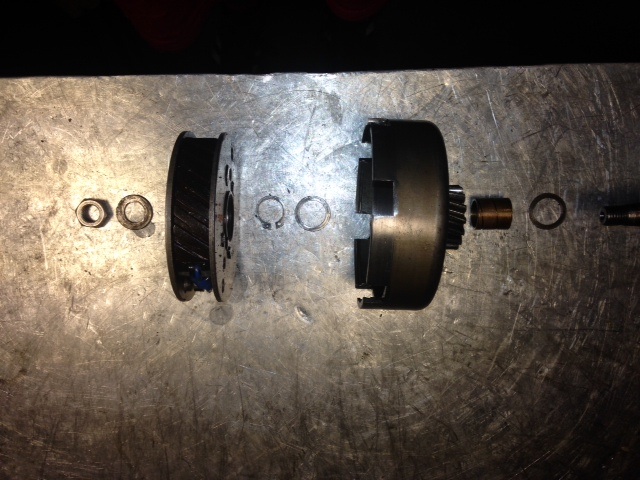
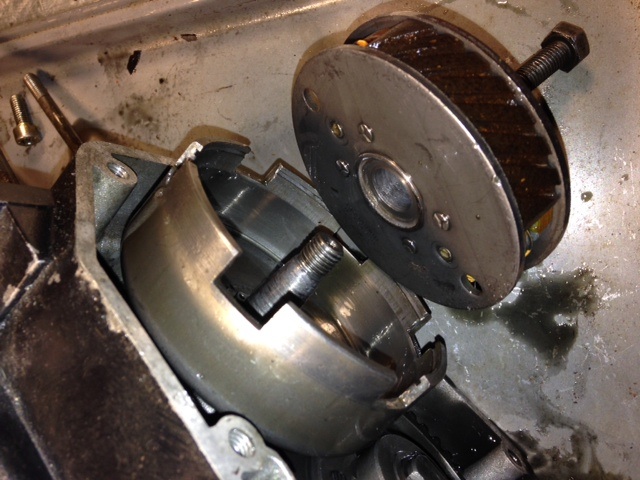
Speed ranges assume correct jetting, healthy compression, a fresh clutch, and sane sprocket ratios — not a guarantee. The V1's known weak point is the starter-clutch assembly (ball bearing and leaf springs); a slipping starter plate or glazed shoes will waste power at any tier.
Know the platform first
- Engine family — V1 = piston-port, 42 mm stroke. V1L = case-reed from the factory, 39 mm stroke — different porting baseline. C2 / C3 / V2 = variated; not covered by this article.
- Carburetor — Dellorto SHA 14/12 or 15/15 is typical. Some restricted 20 mph bikes used a 9 mm intake port and bent 12 mm manifolds. Jet by plug chop — SHA numbers do not match Bing.
- Drivetrain — Centrifugal clutch → primary reduction gears → chain → rear wheel. Front sprockets often run 9T (20 mph), 10T (25 mph), or 11T (30 mph) from the factory; rear sprockets commonly land in the high 30s to mid 40s tooth range. Gearing is a restriction and a tuning tool.
- Clutch case — Fill with SAE non-detergent 30 weight oil after rebuilds. Foamy detergent oil can ruin clutch engagement.
- Spark plug — NGK B5HS or B6HS, gapped around 0.024". B6HS is the common kitted-bike starting point.
- Porting reference — Use the port timing calculator with the Minarelli V1 preset (42 mm stroke, 85 mm rod).
Build 1 — Mild Street refresh
For a bike that has sat for years or never ran right. The goal is a dependable low-30s runner — not a leaderboard build.
What builders actually do
- Baseline health — Compression test, crank seal check, fresh fuel lines, clean tank. Jetting cannot fix a leaking case.
- Ignition — Points gap and static timing per the service manual. NGK B6HS at ~0.024" gap. CDI swaps reduce maintenance but still need correct timing.
- Stock restrictions — Measure cylinder bore (sub-39 mm bores often indicate a 20 mph jug). Check front sprocket tooth count. Remove exhaust baffle and intake restrictor only when you are ready to rejet.
- Jetting — After derestriction, step the SHA main jet up gradually and plug-chop at WOT. See carb jetting.
- Clutch case service — Drain old gearbox oil, inspect clutch shoes for glazing, check starter-plate bearing for play, set clutch cable tension so the lever is soft but does not hit the bars.
- Fuel mix — 50:1 premix on a stock top end. See oil mix chart.
Design pipe for this tier — broad peak, 42 mm stroke / 22 mm port-height example (Motori_Minarelli). Measure port width for D₁.
Build 2 — Mid Big-bore daily racer
The enthusiast sweet spot: a 70–75cc cast kit, matched exhaust, and clutch tuning aimed at high-30s to low-40s mph without constant teardown.
What builders actually do
- Cast kit — 70cc-class kits are the common jump; 75cc Polini cast iron is a well-worn path on V1s. Confirm horizontal V1 fitment, not V1L reed cases unless that is what you own.
- Port matching — Align cylinder transfers and exhaust with case openings. Measure exhaust port height and run the calculator — do not guess duration.
- Performance pipe — Use a pipe meant for horizontal Minarelli bore size. Puch pipes can be adapted but need bracket work. Jet +2 to +4 minimum after install, then chop.
- Carb — Step up to SHA 15/15 when the kit demands more air. Tune main, needle clip, and idle together.
- 2-shoe clutch tune — Fresh lining, stronger springs, and a clean bell are how you put power to the chain. Kitted V1s often show slight starter-clutch slip — normal unless you mod starter plate pads.
- Gearing — Bump front sprocket teeth only after the motor pulls cleanly; too tall a gear lugs a piped small-bore.
- Break-in — Richer premix (32:1–40:1) for the first tanks, varied throttle, no long WOT until seated.
Design pipe for this tier — balanced peak, 169–175° piped band at ~9.5k RPM. Run port height through the timing calculator after port match.
Build 3 — Wild Ported race setup
The ceiling for a port-inducted V1 case — or the starting line if you have a factory V1L reed engine. Aggressive porting, large displacement kits (75–80cc and beyond), and clutch hardware rated for sustained high RPM.
What builders actually do
- Top end choice — On piston-port V1 cases, builders either port aggressively in place or move to V1L-style reed induction with case machining and adapter plates. Reed breathing changes carb and jetting needs entirely.
- Aggressive porting — Raise exhaust timing with measured cuts, widen transfers with radiused edges, and verify piston clearance at TDC and BDC. Log every dimension.
- Large kits — 75cc Polini, 80cc cast kits, and larger race jugs appear in dedicated Minarelli builds. Expect full-circle crank upgrades and gasket work to restore port timing on some combos.
- 3-shoe clutch — Aftermarket 3-shoe setups with stiff springs hold RPM where 2-shoe stockers fade. Inspect taper on crank and clutch; a worn taper keeps the bell engaged.
- Race pipe & carb — Match pipe length to port timing. Carbs larger than 15/15 SHA appear here with intakes sized to the bore kit.
- CDI — Auto-advance CDI units show up on race builds; lighting may need a separate solution if you delete the stock stator path.
- Heat & plugs — Carry spare B6HS/B7HS plugs. This tier is for short bursts — not quiet neighborhood cruising.
Design pipe for this tier — sharp peak, 176–182° / ~10.5k band for ported race setups. 3-shoe clutch mandatory.
Mistakes that waste money
- Treating a V1 like a variated bike — Roller weights and contra springs do not apply. C2/C3/V2 are a different engine.
- Confusing V1 and V1L — Different stroke, different induction. Parts and port math are not interchangeable by default.
- Pipe without jets — Every airflow change needs a plug chop.
- Kit without port match — Misaligned transfers are seizure bait.
- Wrong gearbox oil — Detergent automotive oil foams and kills clutch grab.
- Ignoring the starter clutch — The ball bearing and leaf springs fail from holding the lever in at RPM.
- Minarelli V1 model history
- Exhaust duration calculator (V1 preset)
- SHA & Bing jetting guide
- Premix ratios
- Live chat for jetting and clutch questions