People search "moped vs scooter" because the bikes can look the same. Many mopeds are step-through, and step-through is common on scooters too. That shared frame shape does not separate them.
The difference is where your legs are. On a scooter your legs are in front of you, feet on the floorboard. On a moped your legs are to the sides, on pedals, the way they are on a bicycle, even when the frame is step-through. This site covers classic pedal mopeds, not scooters.
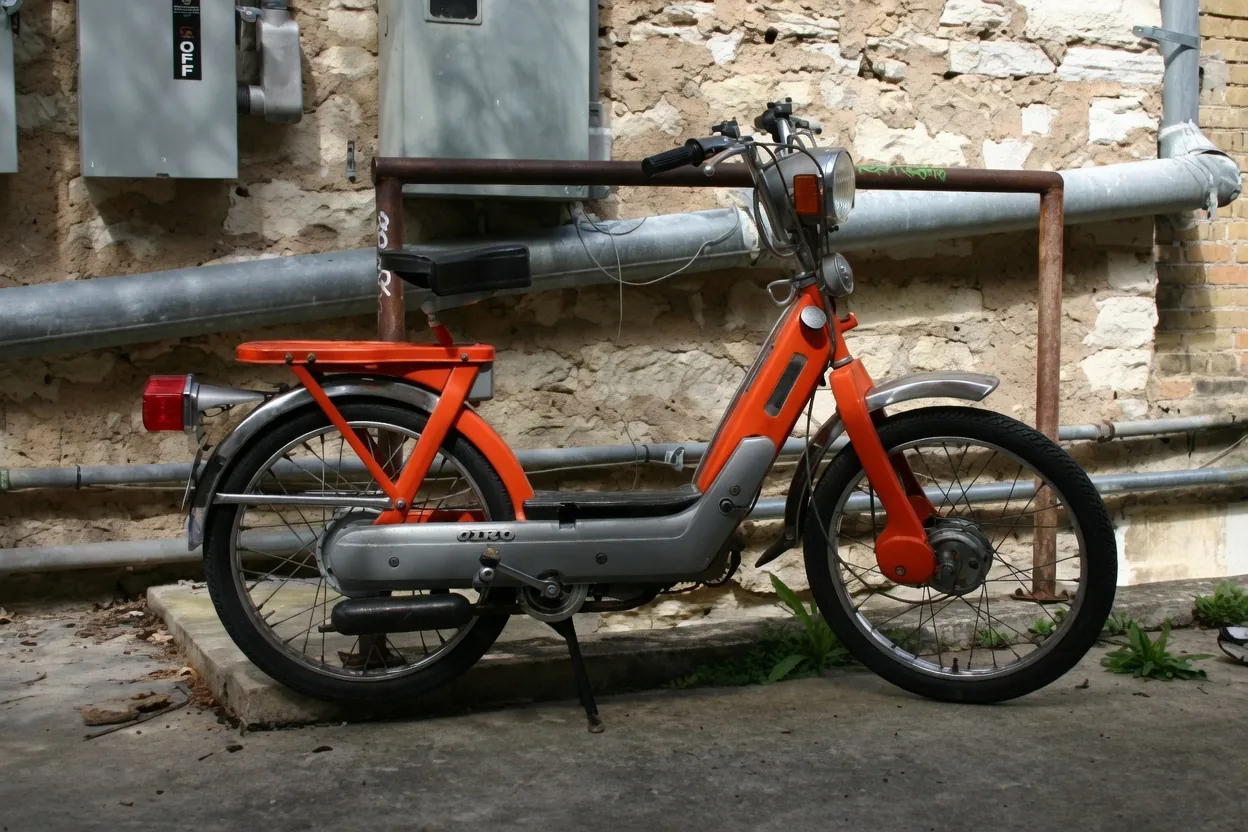
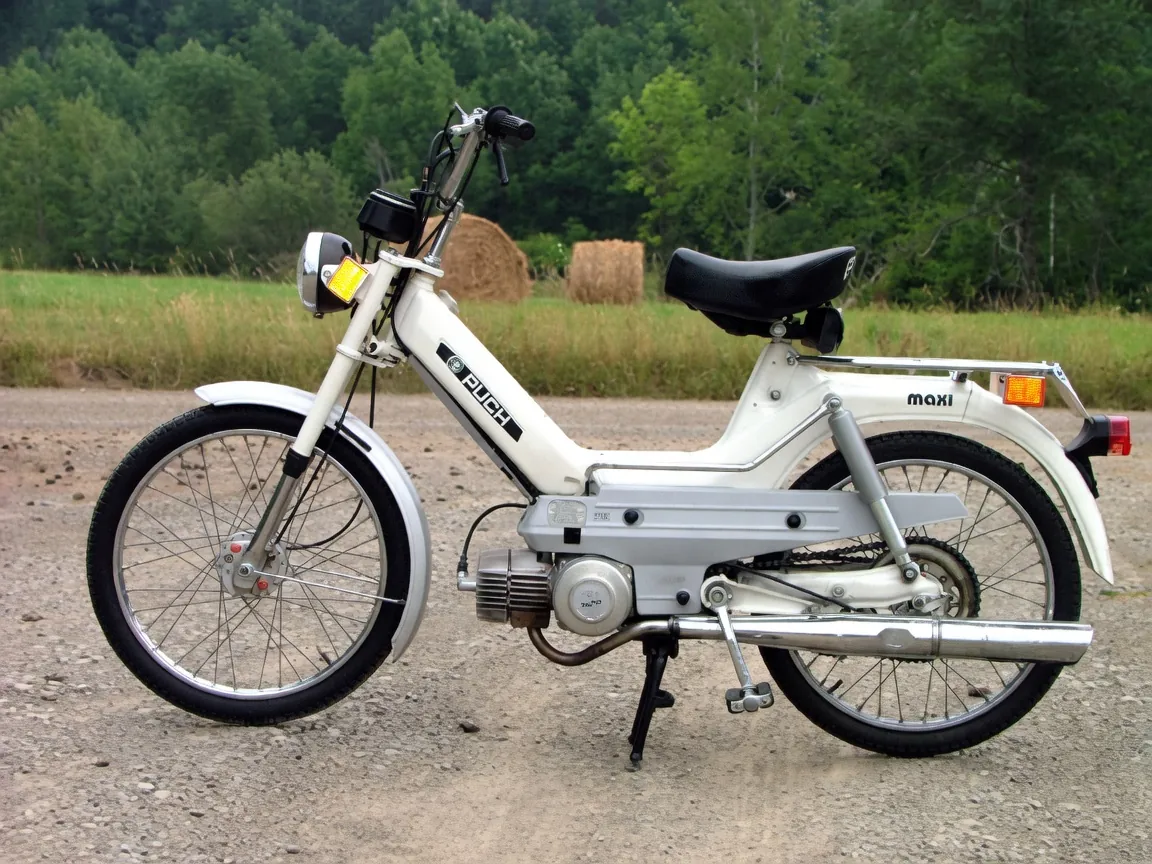
What a moped is
- Engine. Usually about 50cc or under. 49cc is the figure on the common US classics: Puch Maxi, Tomos, Honda Express, Peugeot 103.
- Pedals. Real pedals, which can turn the rear wheel the way a bicycle's do. Some later machines sold as "mopeds" kept only pedal remnants, or dropped pedals for foot pegs. The Honda Express and Hobbit are the named exception: foot pegs, not pedals, with your legs still to the sides rather than on a floorboard. Pegs are not the definition.
- Seating. Legs to the sides, on the pedals, including on a step-through Maxi or Ciao. The frame can look like a scooter. Where your legs go is what separates them.
- Speed class. Stock restricted bikes were commonly aimed at about 25–30 mph. A healthy or derestricted bike can be faster. Our Tomos page puts a mild sorted stock A35/A55 around 30–35 mph. A speedometer reading is a clue, not the definition.
- Transmission. Not one gearbox. Puch E50: single-speed centrifugal clutch and a chain. Puch ZA50 and Tomos A35/A55: automatic two-speed and a chain. Peugeot 103 and the Motobécane 50V: a variator, which is a CVT, on a pedal moped. A variator is the same transmission type as a scooter belt CVT. Here it is on a pedal moped you can see, not a belt hidden under scooter panels.
What a scooter is
- Legs in front. Your feet sit on a flat floorboard, in front of you. There are no pedals at the sides. You do not start it or move it by pedaling.
- Body. Panels cover the engine. The engine is usually at the rear, under that body, not hanging in an open bicycle frame.
- Belt CVT under the panels. Many scooters use a variator (a CVT) on a belt between the engine and the rear wheel. That is the same transmission type as the variator on a Peugeot 103 or Motobécane. What makes it a scooter is the packaging: under body panels, with a floorboard and no pedals. It is not the chain you service on a Puch or Tomos.
- Engine and speed. 50cc scooters exist, and they cause most of the naming mess. 125cc, 150cc, and larger are common, and they are a faster class than a restricted moped.
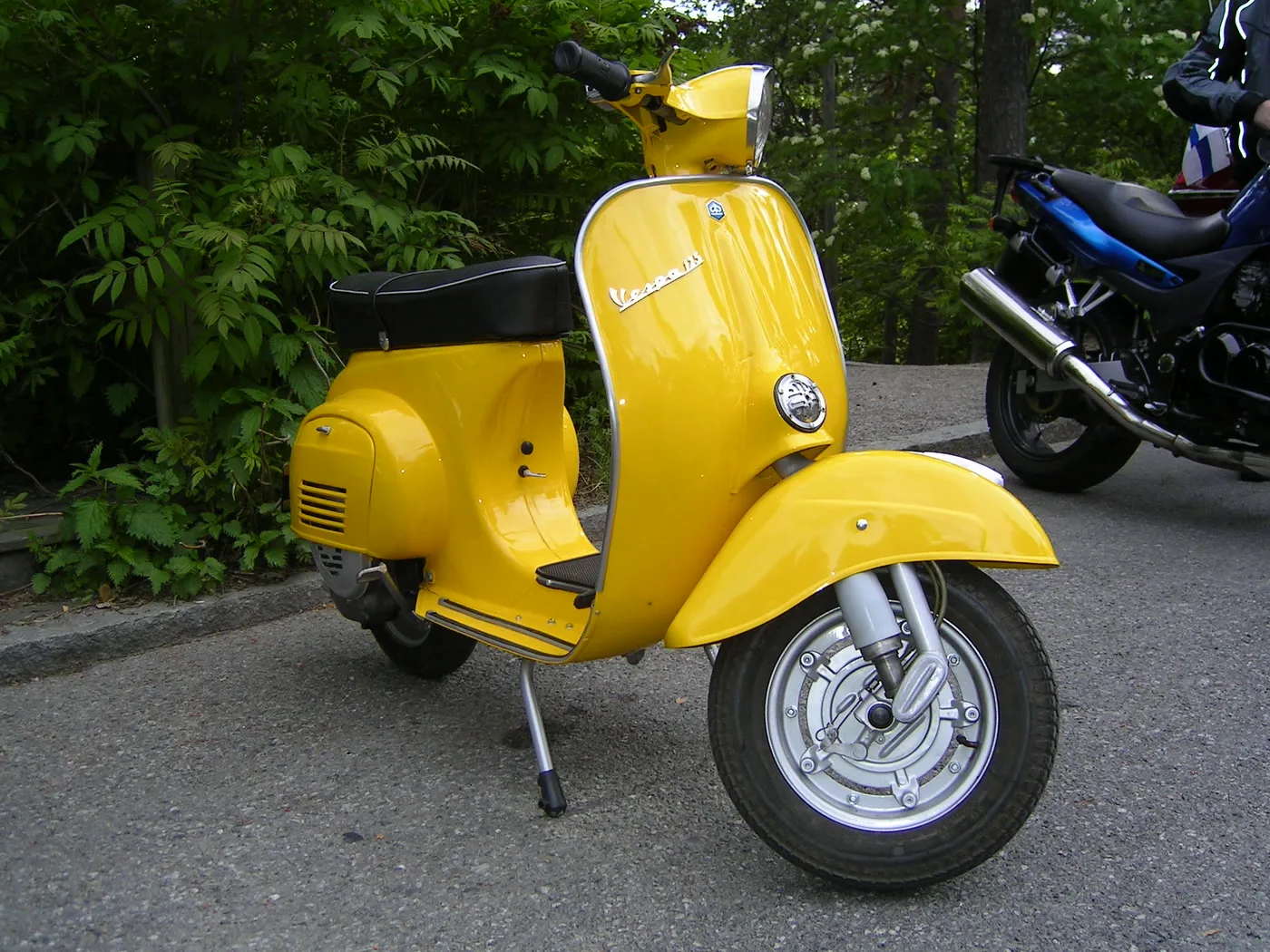
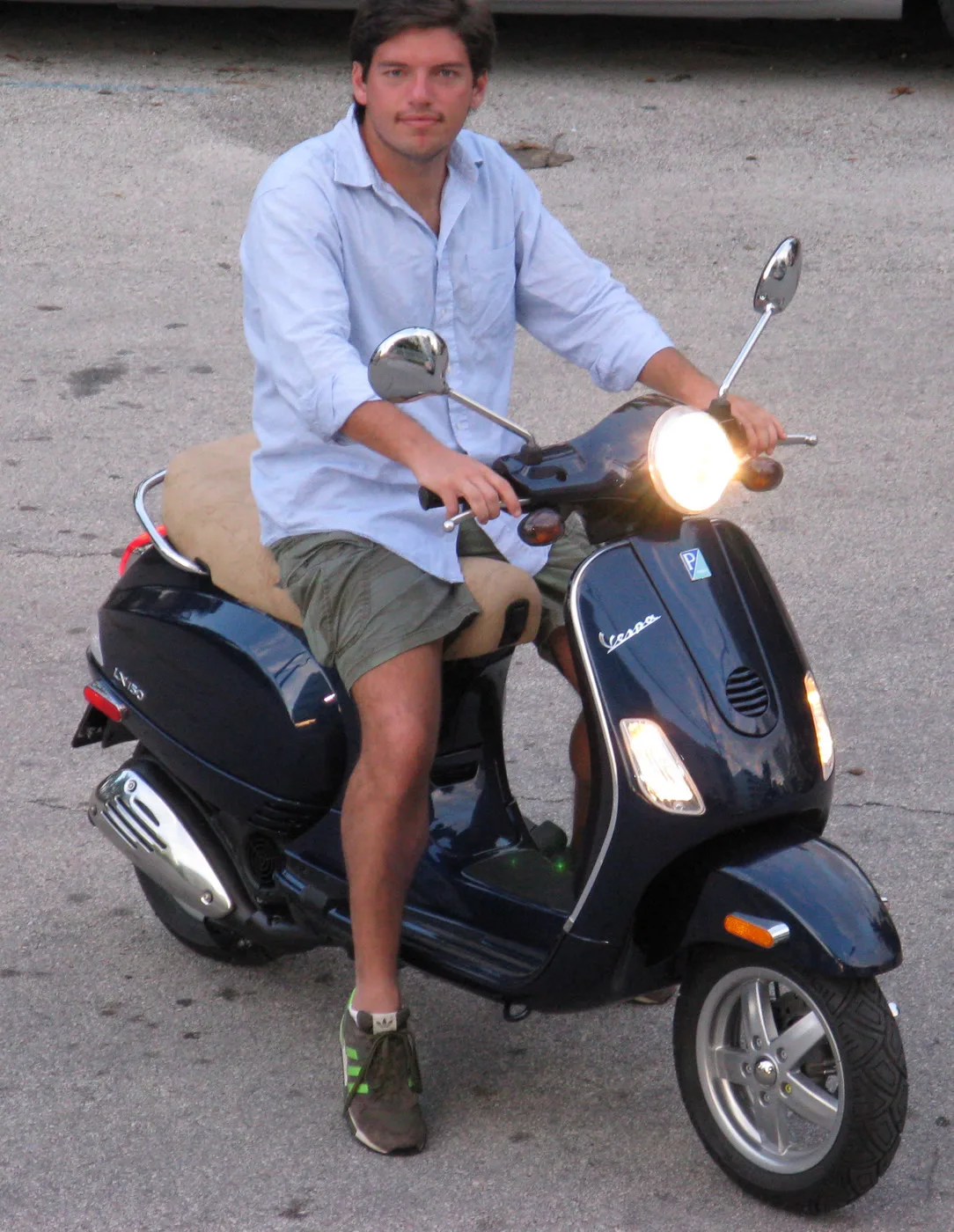
A Vespa Primavera or PX is a scooter. Piaggio's Ciao is the pedal moped from the same company. The badge does not decide it. See the Ciao guide.
That is a difference in the machine, not a rank. Scooter tuning and modifying is a large culture, especially outside the United States, in Europe, Asia, and elsewhere. This site still covers classic pedal mopeds, not that scene.
Why they get confused
Frame shape is the trap. Step-through is common on both, so it does not sort them. From a distance a Ciao and a small scooter can look related. Up close, one has your legs to the sides on pedals. The other has your legs in front, feet on a floorboard. A CVT does not sort them. A Peugeot 103 or Motobécane variator is a CVT on a pedal moped. A scooter belt variator is that same transmission, under the panels.
The other overlap is the word. Many US dealers, ads, and state agencies say "moped" for a small 50cc machine, including scooters with no pedals and a floorboard. A 50cc scooter can land in the same registration bucket as a pedal moped because of displacement and speed, not because it is the same machine. That bucket is a paperwork class. It is not the same in every state, and it is not one US law. Bikes sold as a "new moped" with a floorboard and no pedals are scooters using the loose word, even when a belt CVT sits under the panels. That variator is a CVT, the same transmission a Peugeot 103 or Motobécane can use on a pedal moped. See what still counts as a new US moped.
Side by side
| Feature | Moped | Scooter |
|---|---|---|
| Where your legs are | To the sides, on pedals (bicycle position), even on a step-through frame | In front of you, feet on the floorboard |
| Pedals | Usually drive the wheel. Later bikes may have remnants or pegs only (Honda Express). | None |
| Frame | Often step-through. Shape does not decide it. | Often step-through. Shape does not decide it. |
| Engine | Usually about 50cc or under | 50cc exists; 125–150cc and up are common |
| Speed class | Often about 25–30 mph | Faster above a restricted 50cc |
| Transmission | Chain with a clutch or two-speed (Puch, Tomos), or a CVT/variator on a pedal moped (Peugeot 103, Motobécane 50V) | Often a belt CVT/variator too, under the panels, with a floorboard and no pedals |
| Body | Open. Engine and pedals are visible. | Panels over the engine |
Which do I have?
Check the machine, then the paper. In that order. Frame shape will not tell you. Where your legs and feet are will.
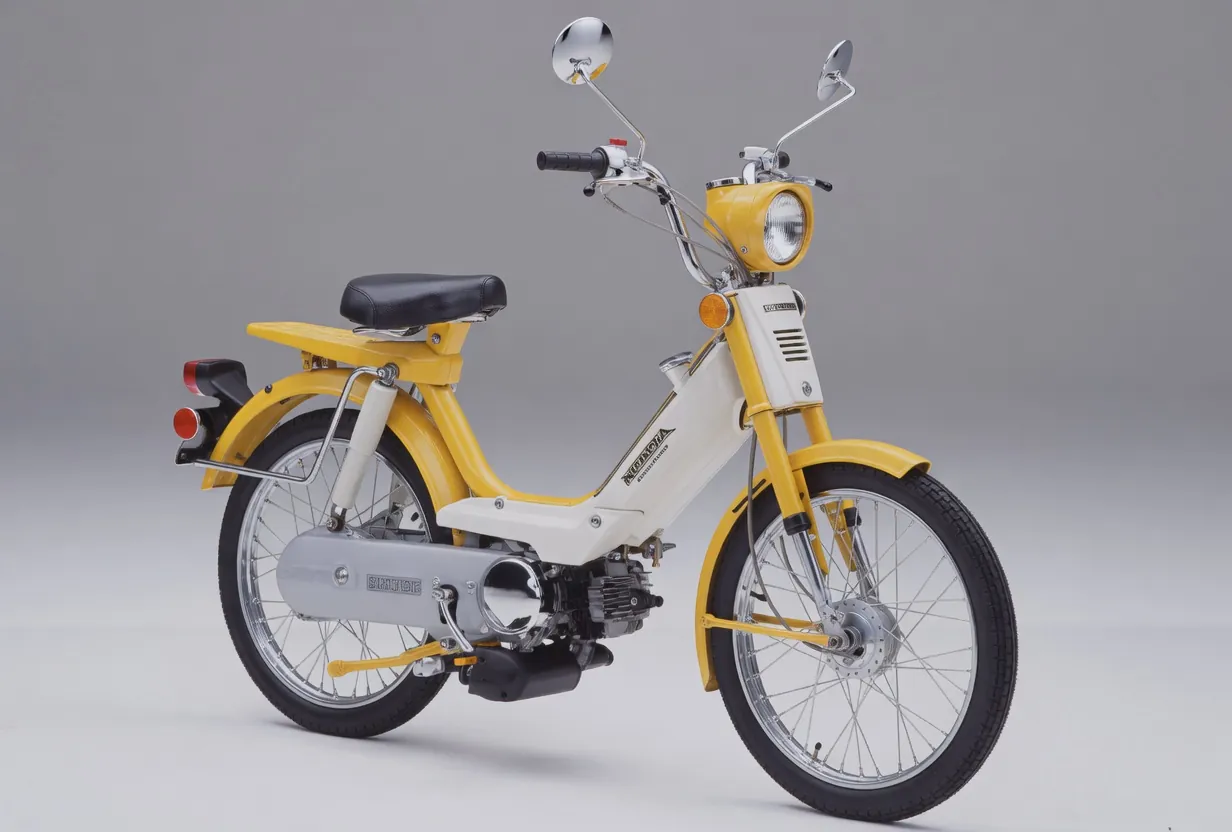
- Where your legs are. To the sides, on pedals, is the moped position, including on a step-through frame. In front of you, feet on a floorboard, is a scooter. Engine off: do the pedals turn the rear wheel, or turn the engine? On a Puch-style bike the clutch lever disengages the engine so you can pedal. Either way, those are real pedals. A floorboard does neither. Cranks that do not drive anything are remnants, not a bicycle drivetrain. Foot pegs, as on the Honda Express, are not pedals, but the legs are still to the sides.
- Engine size. Read the case, the manual, or the title. About 49–50cc is the classic moped class. 125cc and up is a scooter or a motorcycle, not one of these.
- Transmission. A chain with a centrifugal clutch or a two-speed (Puch, Tomos, Honda) is moped equipment. A variator is a CVT, and both a pedal moped and a scooter can have one. On a Peugeot 103 or Motobécane it is part of a pedal bike. On a scooter the same kind of belt CVT sits under the panels, with a floorboard and no pedals. The transmission type does not decide it.
- Top speed. A stock restricted moped sits around 25–30 mph. A bike that does highway speed stock was not built as that class. A tuned moped can be faster than stock, and a governed 50cc scooter can be slow. Speed supports the other checks. It does not replace them.
- Title and registration. Useful, not proof. Many titles say "moped" on scooters because that is the state's word for the plate class. Start with the 50-state table. It is a summary, not advice, and a blank cell means unknown.
Which should I buy?
If you want a classic moped — legs to the sides on pedals, or the no-pedal Honda peg case, a small two-stroke, a chain, a two-speed, or a variator (a CVT) on a pedal bike, parts you can see — start with the bikes this site covers:
- Puch Maxi (E50 or ZA50) — tuning guide
- Tomos A35 / A55 — service guide
- Honda Express / Hobbit — no pedals, oil injection, still not a scooter — guide
- Peugeot 103 and Motobécane — variator (CVT) mopeds with pedals
- Piaggio Ciao — pedal moped, not a Vespa scooter — guide
A short comparison of four of them: Maxi vs A35 vs Express vs Ciao. Before you pay: buying guide and budget checklist. The full list is 25 classics.
A scooter is a different buy, not a lesser one. Your legs are in front of you, feet on the floorboard, and there are no pedals. Many use a belt CVT under the panels. That variator is the same transmission type as on a Peugeot 103 or Motobécane, just packaged differently. Tuning and modifying scooters is a large culture, especially outside the United States, in Europe, Asia, and elsewhere. This site does not cover that scene. It stays with classic pedal mopeds. The license class can differ, and that rule is local.
License and registration
There is no universal moped law. One state may care about pedals, horsepower, and a speed cap. Another may call anything about 50cc and slow a moped, pedals or not. A faster or larger scooter is often a motorcycle or motor-driven cycle instead, which can mean a motorcycle license. The cutoff is local.
California is one written example, not the national rule. Its motorized-bicycle ("moped") definition covers an automatic-transmission machine under 4 gross brake horsepower and 30 mph on level ground, with pedals — or the electric case the statute spells out. That class takes an M1 or M2 license. Details and the official links are on the California page.
Other states we have notes for, each different: Texas, Florida, New York, Pennsylvania. The index is the 50-state table. Other countries draw their own displacement and speed lines. This page does not pretend those are one rule.