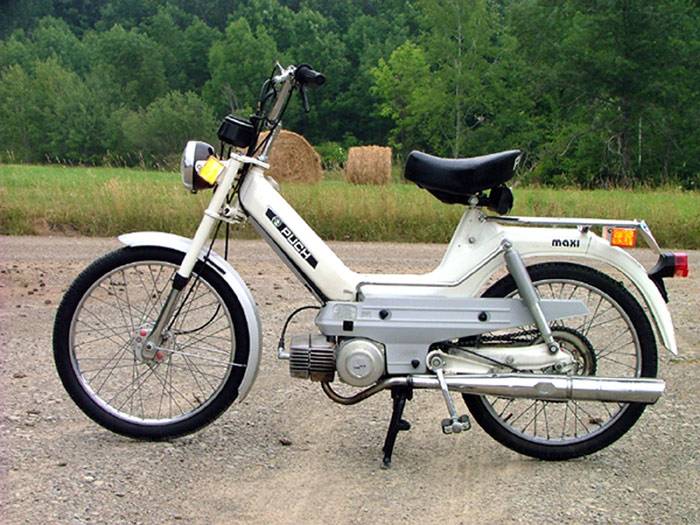
The Puch Maxi and Newport are the default US tuning platform: 49cc two-stroke, pedal start, chain final drive. Stock bikes ship as 1 HP (~20 mph), 1.5 HP (~25 mph), or 2 HP (~30 mph) — and the engine code matters more than the frame badge. This guide covers E50 (one-speed) and ZA50 (two-speed automatic) engines. It is not scooter CVT advice.
E50 vs ZA50 — identify before you order parts
Pop the right-side engine cover and look at the shape. The E50 is a single-speed engine: one centrifugal clutch in the bell, no internal gear shift. The left lever disengages the clutch for pedal starting; once running, shoes grab by RPM. The ZA50 is an automatic two-speed: first and second engage by centrifugal clutches inside the cases — no shift lever. Its transmission cover is noticeably more rectangular than the E50.
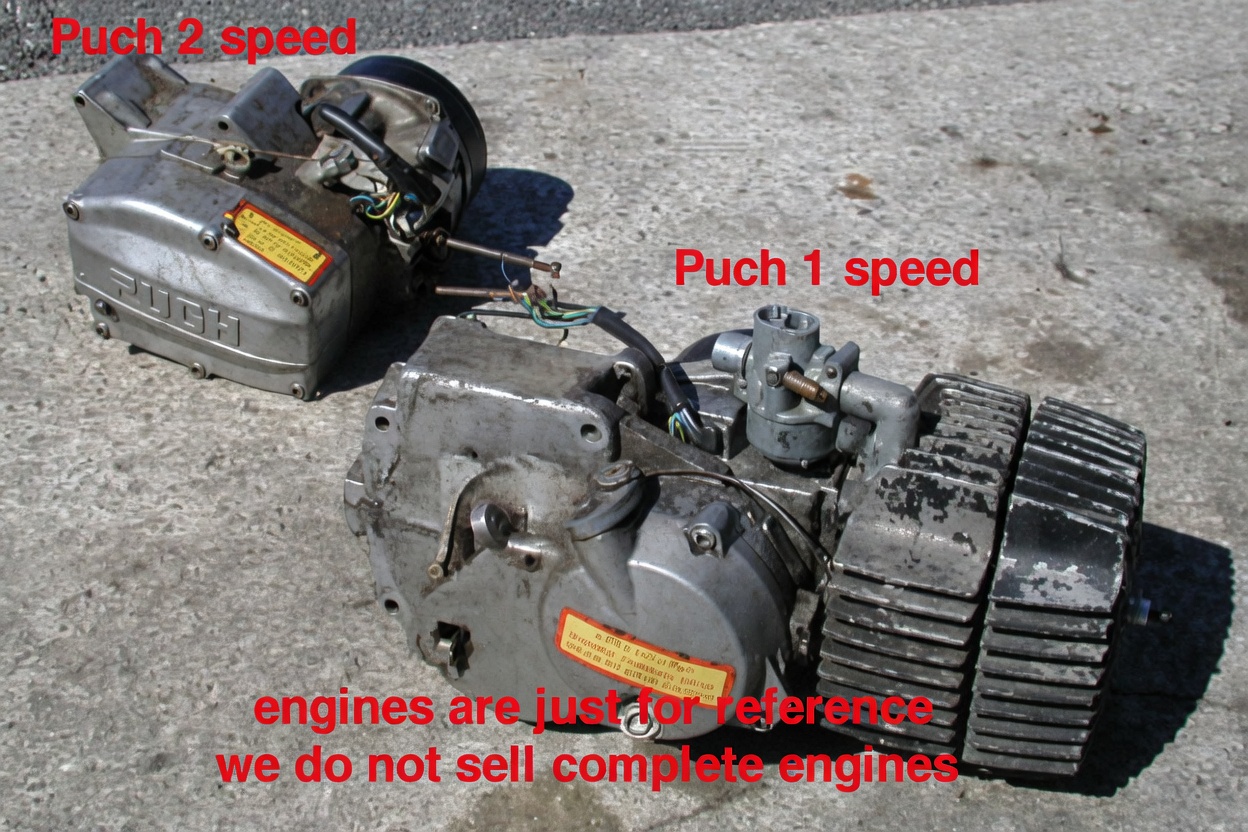
| Engine | Speeds | Clutch type | Stock carb (typical) | Tune levers |
|---|---|---|---|---|
| E50 | 1 | Centrifugal shoes in bell | Bing 12/14 mm by HP | Shoe weight, springs, jetting, pipe |
| ZA50 | 2 (auto) | Two internal centrifugal clutches | Same Bing family | Trans fluid, pucks, clutch flip, springs, jetting |
Both are piston-ported from the factory. Reed-valve kits (Polini, Athena AJH, etc.) require case machining — not a bolt-on Stage 2 part. Some ZA50s have oil injection; most US bikes are premix in the tank.
1 HP, 1.5 HP, and 2 HP — what actually changes
HP rating is stamped on the data plate and reflected in carb jetting, top-end parts, and (on ZA50) internal gearing. Do not copy jet sizes from a forum post until you know your Bing part number and HP class.
| Rating | Typical stock speed | Key differences |
|---|---|---|
| 1 HP | ~20 mph | Restricted cylinder intake port, thick head gasket, small intake, smaller jets; ZA50 uses taller internal gearing (see below) |
| 1.5 HP | ~25 mph | 12 mm intake manifold, head gasket present, intermediate Bing setup |
| 2 HP | ~30 mph | 14 mm manifold, no head gasket (or thin), larger jets and slide — factory target class |
Puch published an official 1.5 HP → 2 HP conversion bulletin. The changes are specific — not “bigger jet and hope”:
- Intake manifold: 12 mm → 14 mm (P/N 321 315 630 1)
- Head gasket: 1.5 mm → none
- Air filter: remove large orifice pipe; fit small pipe (P/N 349 115 073 1)
- Main jet: #50 → #56
- Throttle slide: #51 → #24
- Needle jet: 2.12 A → 2.22
- Exhaust: drill two 10 mm holes per factory pattern (see exhaust derestrict guides)
Stuck with a 1 HP bike? You are fighting restrictions the 1.5/2 HP bikes never had. Plan on cylinder work (or a replacement jug), not just jets.
1 HP derestrictions — where the speed is hidden
One-horsepower Puchs carry extra restrictions beyond the 1.5→2 HP bulletin. Find and fix these before you buy a pipe or kit.
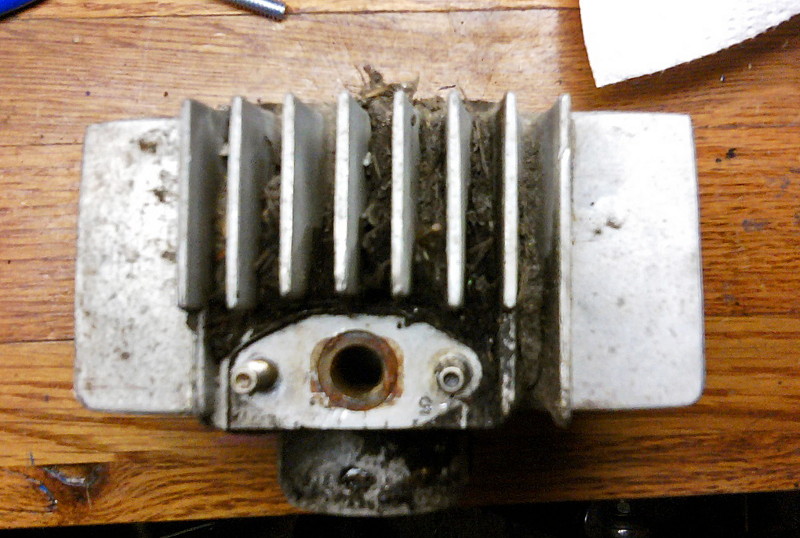
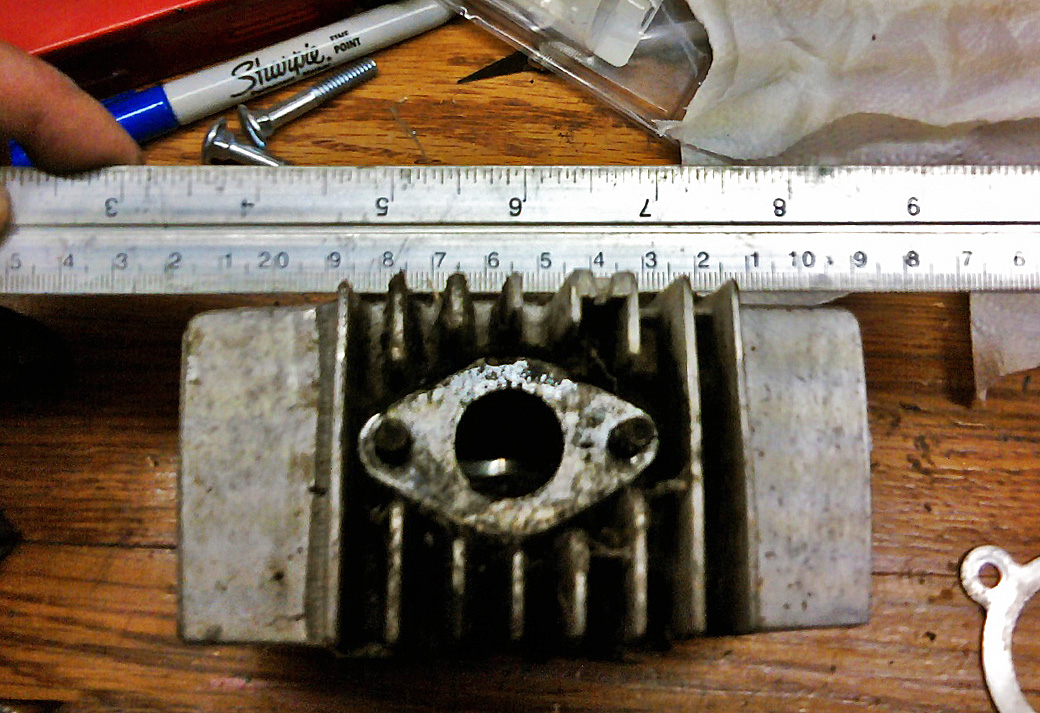
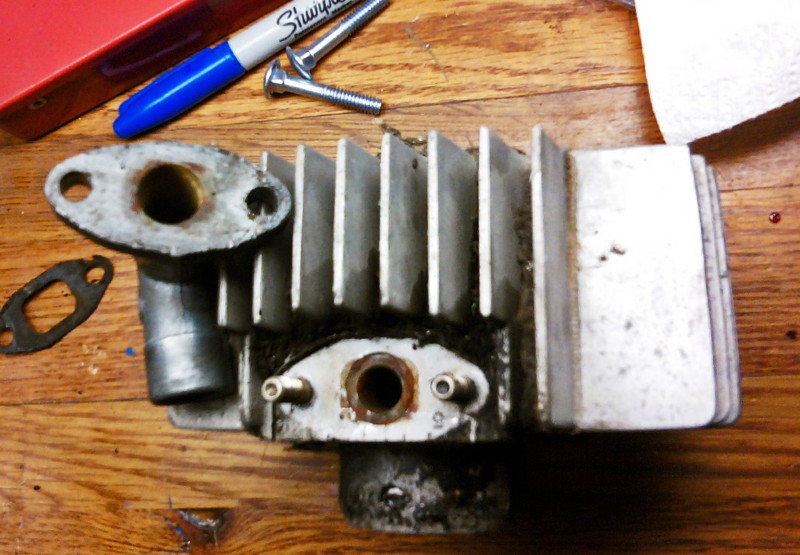
Cylinder intake port
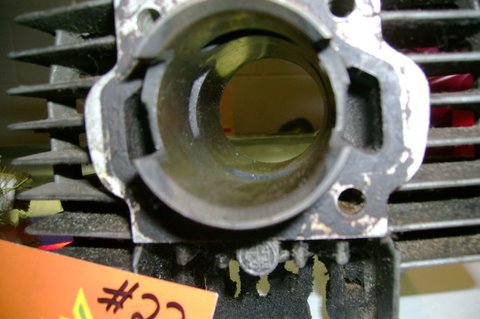
The intake port is severely restricted where the manifold bolts on and often inside the bore. A restricted #4 or #5 cylinder looks obviously pinched compared to a 2 HP jug.
Intake manifold
The 1 HP intake matches the restricted port — it is physically small. Swapping to a 14 mm 2 HP manifold without port work buys little.
Head gasket
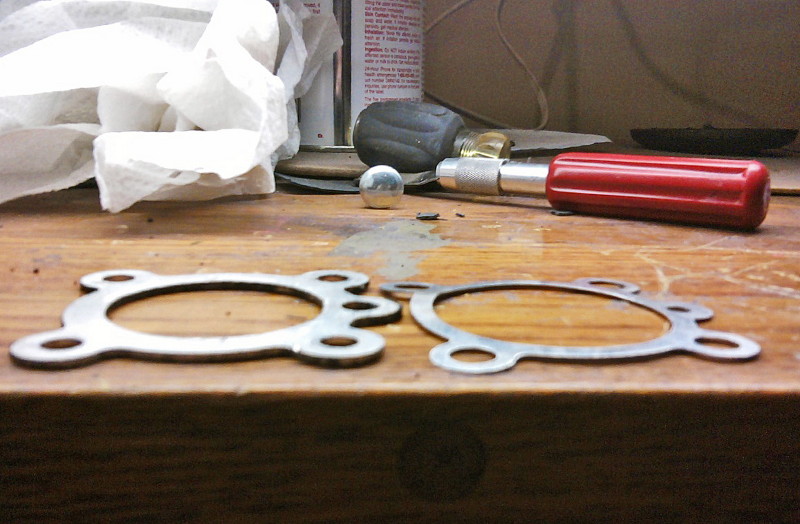
1 HP bikes use an extra-thick head gasket to lower compression. Compare to a normal gasket (or none) on a 2 HP top end. Replace with a thin gasket, or run no gasket only if the head seals flat and true.
Exhaust
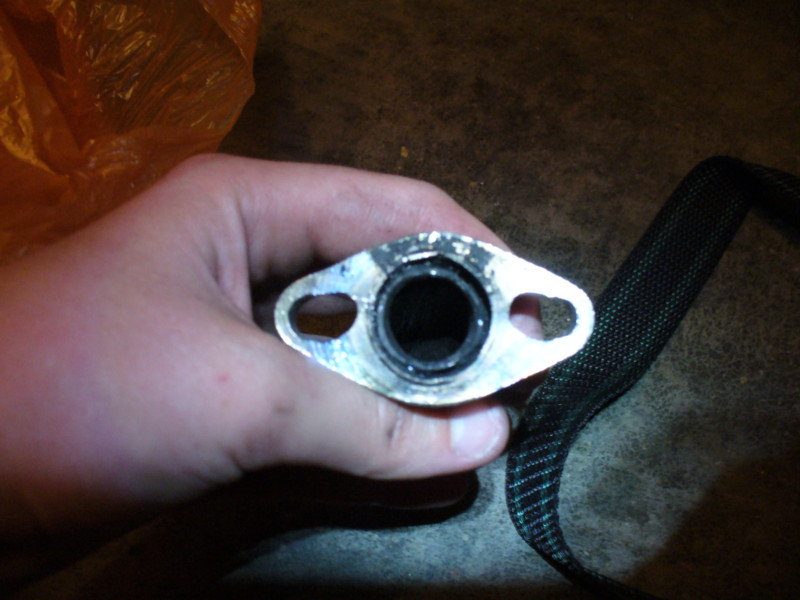
Some 1 HP exhaust ports and pipes are restricted — not every bike, but check yours. Free Spirit and Sears pipes in particular may have an internal baffle ring.
Other 1 HP checks
- Intake restrictor disc — many manifolds have a disc; remove it and jet up (+1 to +2 main steps).
- Piston skirt — at TDC, look through the intake port. If the skirt blocks the port, mark and carefully relieve the skirt (advanced; measure first).
- Airbox orifice — swap per the 1.5→2 HP bulletin if your airbox still has the large restricted pipe.
- ZA50 1 HP gearing — taller internal ratios; count gear teeth before swapping ZA50 cluster parts from a 2 HP donor.
Ignition & timing — do this with a light, not by ear
Puch flywheels are 360 mm diameter = 360°. One millimeter on the rim equals one degree. You do not need a degree wheel — you need a timing light and a real TDC mark.
- Find TDC — use a piston stop or long-reach plug screwed in until the piston hits. Turn the flywheel both directions, mark case and flywheel, find the midpoint — that is TDC. A screwdriver in the plug hole is not accurate enough.
- Mark timing — on an E50, measure 14–17.5 mm to the left of the TDC case mark (BTDC). On a ZA50, the advance direction is reversed — same mm value, opposite side of TDC. Many builders mark the case, not the flywheel.
- Points gap — set 0.016"–0.018" (16–18 thou) with points fully open just past TDC. Service the magneto first: clean points, oil the felt pad, lube the flywheel cam, pre-loosen stator screws.
- Verify under light — stock E50 target is 14–17.5° BTDC. Setting timing by when points first crack open reads several degrees off — do not trust it.
- Kitted builds — aluminum jugs often want 14–14.5° BTDC to avoid heat soak seizures. If 16–18 thou gap still shows ~20–21° at full retard, dremel the stator plate slots for more retard (opposite side on ZA50 vs E50) or reduce gap carefully.
Spark plug: commonly NGK B6HS, gap 0.020"–0.024" on points bikes. A head-temp gauge pays for itself on kitted builds — back off timing if the head approaches 400°F.
E50 centrifugal clutch — not a variator
The E50 has a centrifugal clutch inside the bell. You tune shoe weight and spring tension — not roller weights, not a Peugeot variator. Stock grab RPM is often too low once you add pipe and jetting.
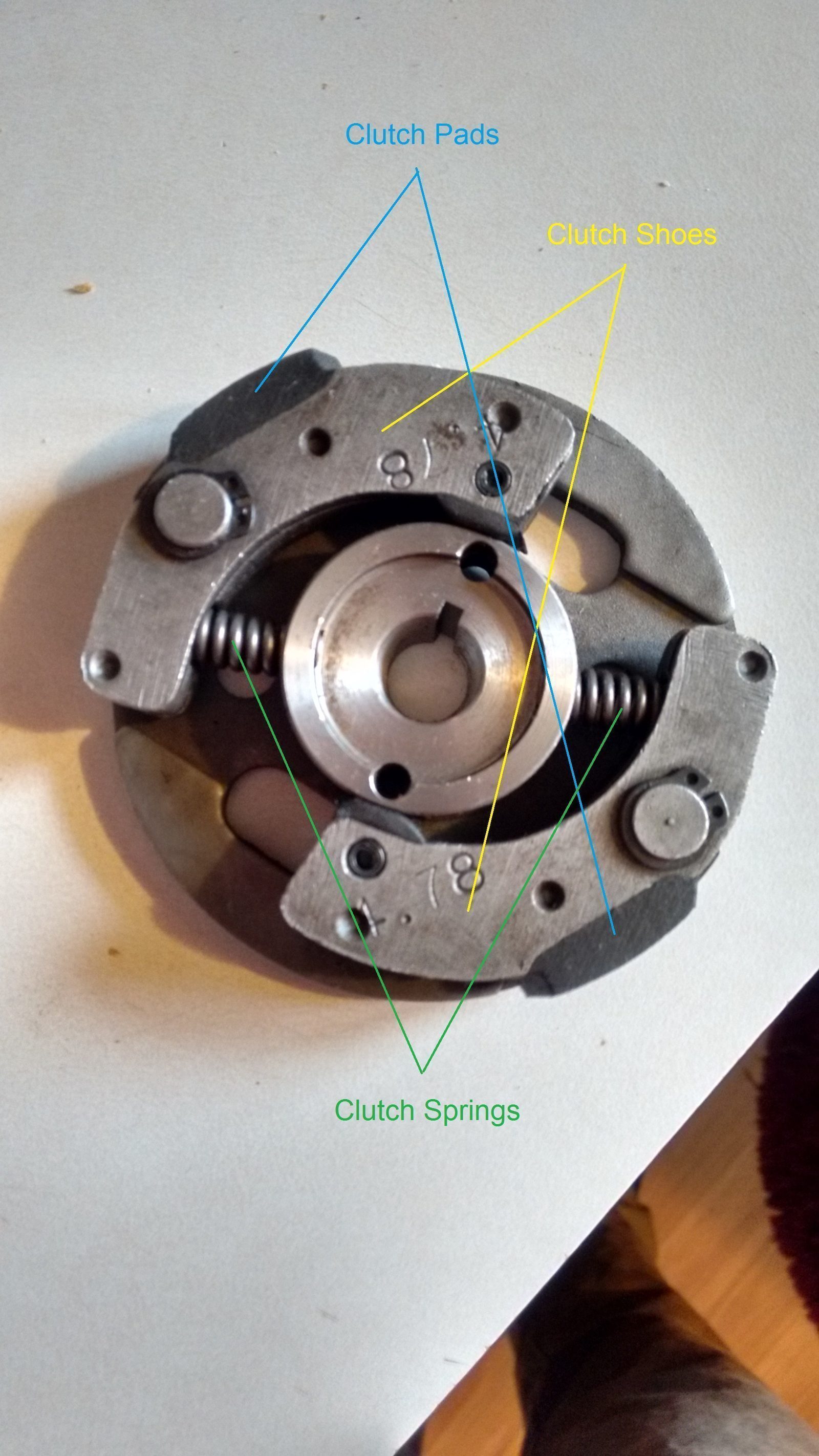
- Blue springs are the common minimum for piped or kitted street builds.
- Shoe weight changes grab RPM quadratically — lighten in small steps. Going under ~55 g per shoe risks slip instead of grab.
- Well-tuned street setups with blue springs often land around ~5800 RPM clutch engagement.
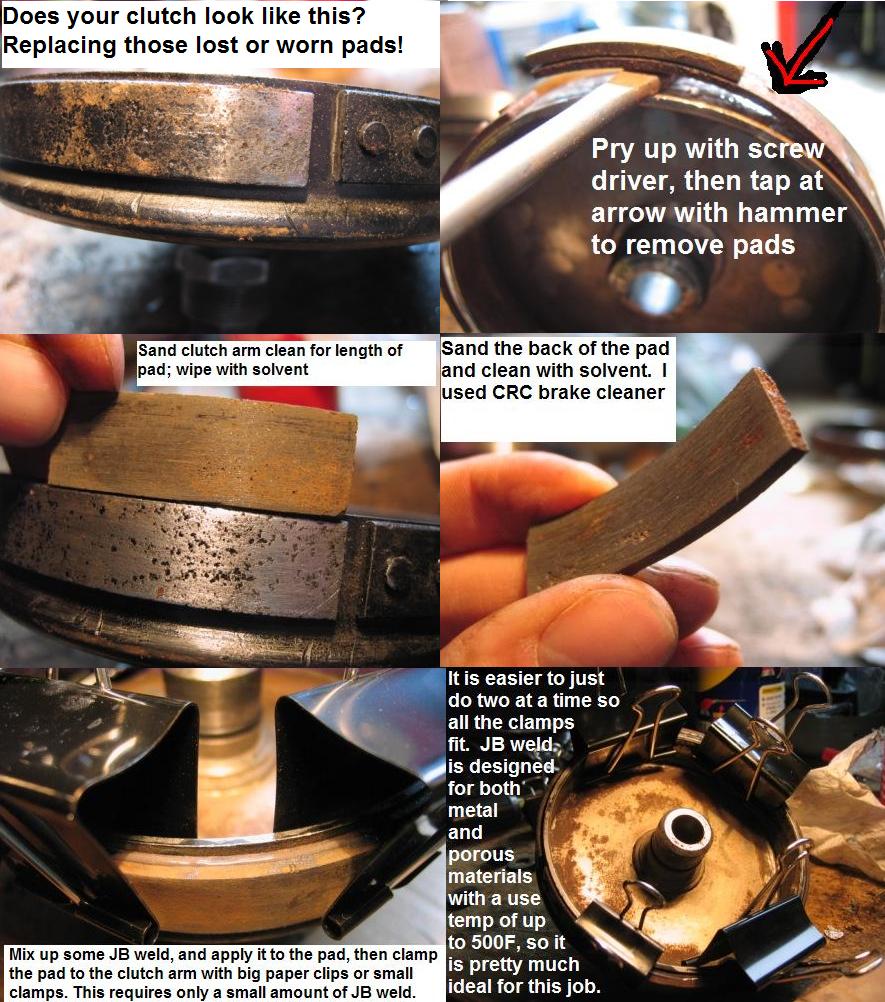
- Glazed or hardened lining slips no matter what jet you run — replace shoes or reline.
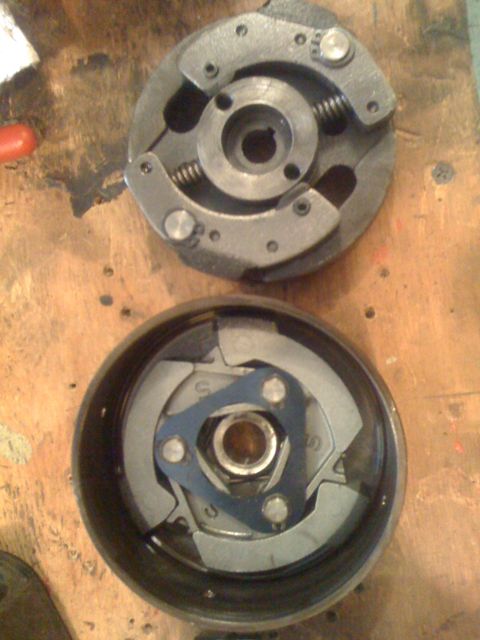
- High-RPM builds: pivot braces stop shoe bending; consider a 3-shoe clutch on Korado/Magnum X variants.
Korado, Magnum X, and kickstart E50s use different clutch bells, shoes, and sometimes three-shoe setups — parts do not interchange blindly with a standard Maxi/Newport E50.
ZA50 two-speed — transmission, pucks, and shift tuning
The ZA50 is tunable, but the transmission is the story. Wrong fluid, dried-out shift pucks, or mixed 1 HP / 2 HP gear clusters will ruin a build faster than a bad jet.
Identify your ZA50 HP version (count teeth)
| Part | 1 HP | 1.5 / 2 HP |
|---|---|---|
| Clutch drum | 13T | 16T |
| 1st speed gear | 73T | 70T |
| 2nd speed gear / main shaft | 66 / 14T | 64 / 14T |
| 2nd speed driving plate | 20T | 22T |
1.5 and 2 HP ZA50s share internal gearing; HP difference is mostly top-end and carb. A 1 HP ZA50 needs the correct cluster (or a full swap) if you are chasing 2 HP road speed.
Transmission fluid
- Stock spec is often Type-F ATF; many builders run 10W-30 gear oil instead.
- Capacity: about 9 oz stock. Overfill ~50% (12–15 oz) helps splash-lube the cover bearings — do not overfill so much that seals pressurize and leak.
- Heavier fluid raises the RPM needed to engage clutches — shift points move with viscosity.
Shift pucks — do not skip these
Rubber pucks inside the 2nd-gear shaft absorb shift shock. After decades, they harden or crumble. Shifting without pucks hammers hardened gear teeth until they chip. Replace pucks on any ZA50 that sat dry or shifts with a bang — especially before installing a kit.
Performance shift tricks
- 2nd-speed clutch flip — flip the second clutch so both spring packs face the cover; delays second-gear engagement ~5–10 mph.
- Clutch weight and springs — same centrifugal logic as E50: lighten arms in small steps, shorten or stiffen springs to raise engagement RPM. Too light on 1st = never grabs; too light on 2nd = never shifts.
- Oil-injection ZA50 — replace pump O-rings (15 × 1.5 mm) or block off the pump if you premix — both sides seal crankcase pressure.
Bing carb & jetting
Read the Bing stamping (e.g. 1/12/294 — the middle number is bore size in mm). Jet numbers are not portable between carbs or HP classes.
| Bing (examples) | Application | Stock main jet |
|---|---|---|
| 1/12/294 | Maxi / Luxe 1 HP | #52 |
| 1/12/293 | Maxi 1.5 HP | #60 |
| 1/14/152 | Maxi 2 HP | #64 |
| 1/15/46A | Aftermarket 15 mm | #82 starting point |
After any airflow change, plug-chop at WOT — one jet size at a time:
- Remove intake restrictor disc: +1 to +2 main
- Performance pipe: +2 to +4 main minimum
- Pod filter: often +2 or more; needle clip position matters
- 70cc kit: treat jetting as a fresh tune — see kit notes below
Full tables and chop procedure: moped carb jetting guide.
Cylinder kits & staged builds
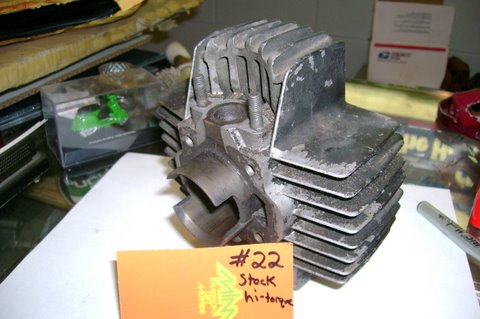
Stock Puch cylinders come in open-port (older aluminum, revs higher) and closed-port (newer cast-iron “hi-torque,” more low-end) flavors — know which you have before comparing port maps.
The Airsal 70cc cast kit is the common US street upgrade. Typical kit port map: 170° exhaust, 114° transfers, ~28 blowdown — log your actual measurements in the port timing calculator. Expect:
- Port match to cases and manifolds — flash and chamfer matter
- Pipe sized for 70cc E50; jet up and clutch out (blue springs minimum)
- Ignition at 14–14.5° BTDC on aluminum; watch head temps
- Premix 40:1 during break-in; richer if the kit maker specifies
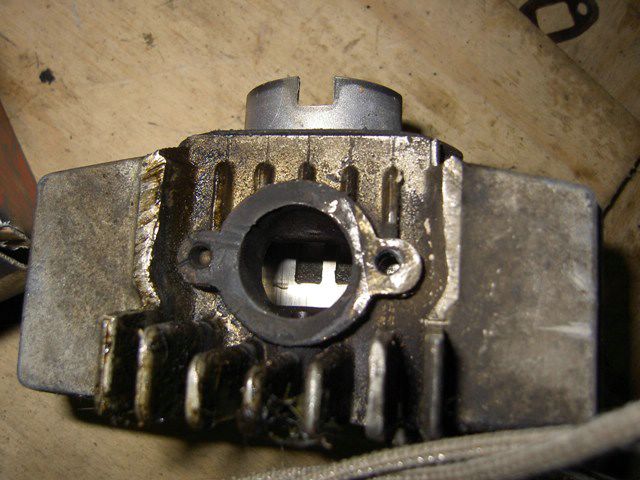
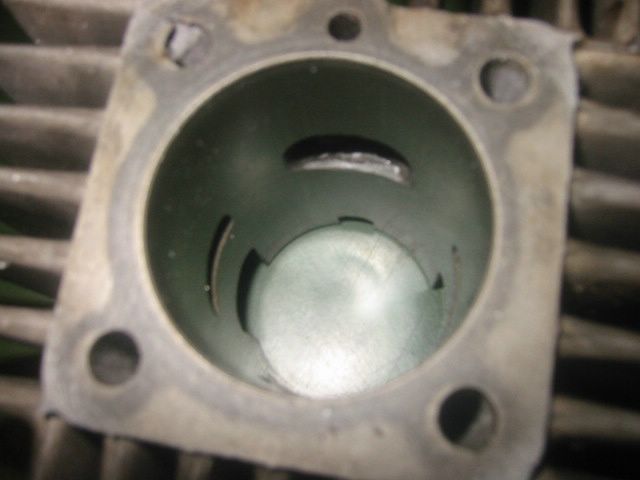
Reed kits (Polini 65, Athena AJH 50, etc.) need case work and carb capacity — separate project from a cast 70cc bolt-on. Full-circle cranks help some race porting but are not mandatory for every 70cc street build.
| Tier | Goal | Realistic top speed |
|---|---|---|
| Mild | Derestrict, timing, fresh clutch | 28–34 mph |
| Mid | 70cc kit, pipe, blue springs, 15/15 Bing | 38–45 mph |
| Wild | Reed case work, porting, race pipe, 3-shoe clutch | 45–55+ mph |
Puch E50 — three build paths →
Oil mix & baseline service
- Premix — stock Puchs commonly run 50:1 with quality 2-stroke oil. Kitted and break-in builds often run 32:1–40:1. See oil mix chart.
- Compression — tired E50s may read ~90–110 PSI warm; compare to a known runner before buying parts.
- Rear chain — adjust, lube, replace hooked sprockets as a set.
- ZA50 — change trans fluid if it smells burnt or is decades old; inspect pucks if shifting bangs.