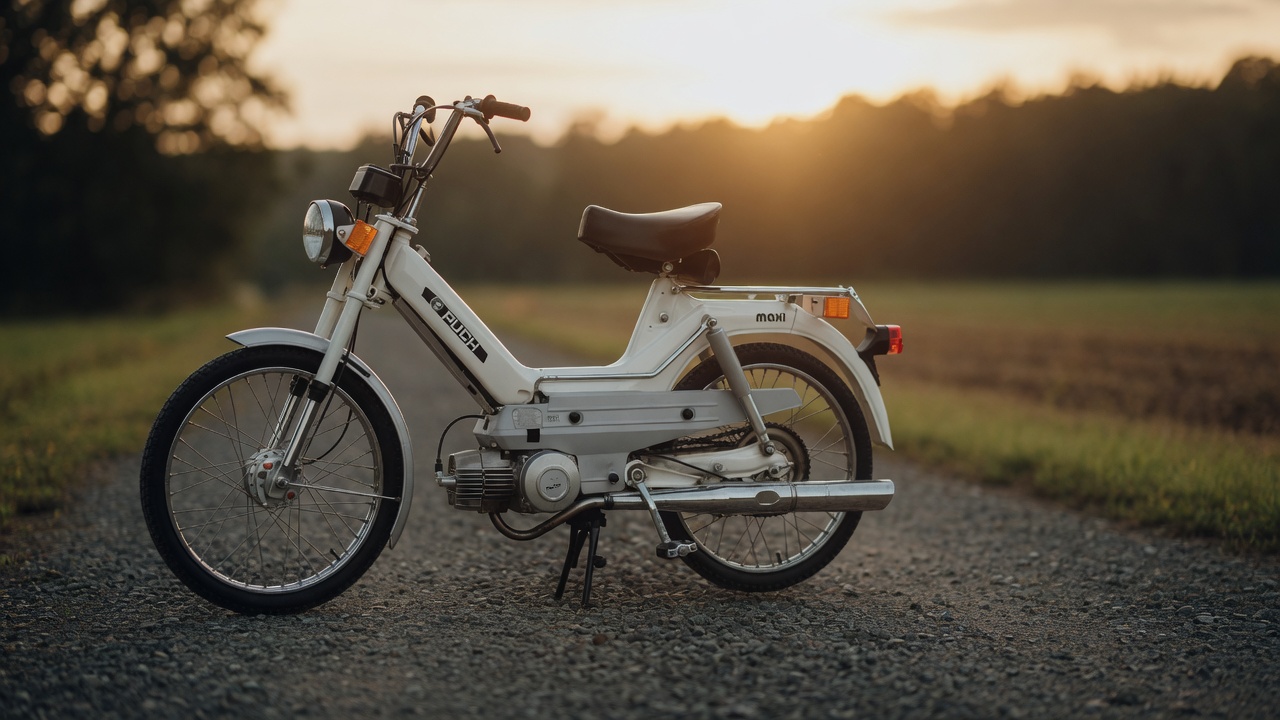
Quick specs
| Displacement | 49 cc class (typical stock ~38×43 mm family) |
| Final drive | Chain + pedals (functional) |
| E50 | 1-speed · centrifugal clutch in bell · Bing 12/14 mm by HP |
| ZA50 | 2-speed auto · internal clutches · more rectangular cover |
| Stock induction | Piston-port (reed kits need case work) |
| Premix | Commonly ~50:1 synthetic; richer on kits / break-in |
| Spark (common) | NGK B6HS · gap ~0.020–0.024" on points bikes |
| US street price | Roughly $500–$1,400 depending on condition and top end |
History
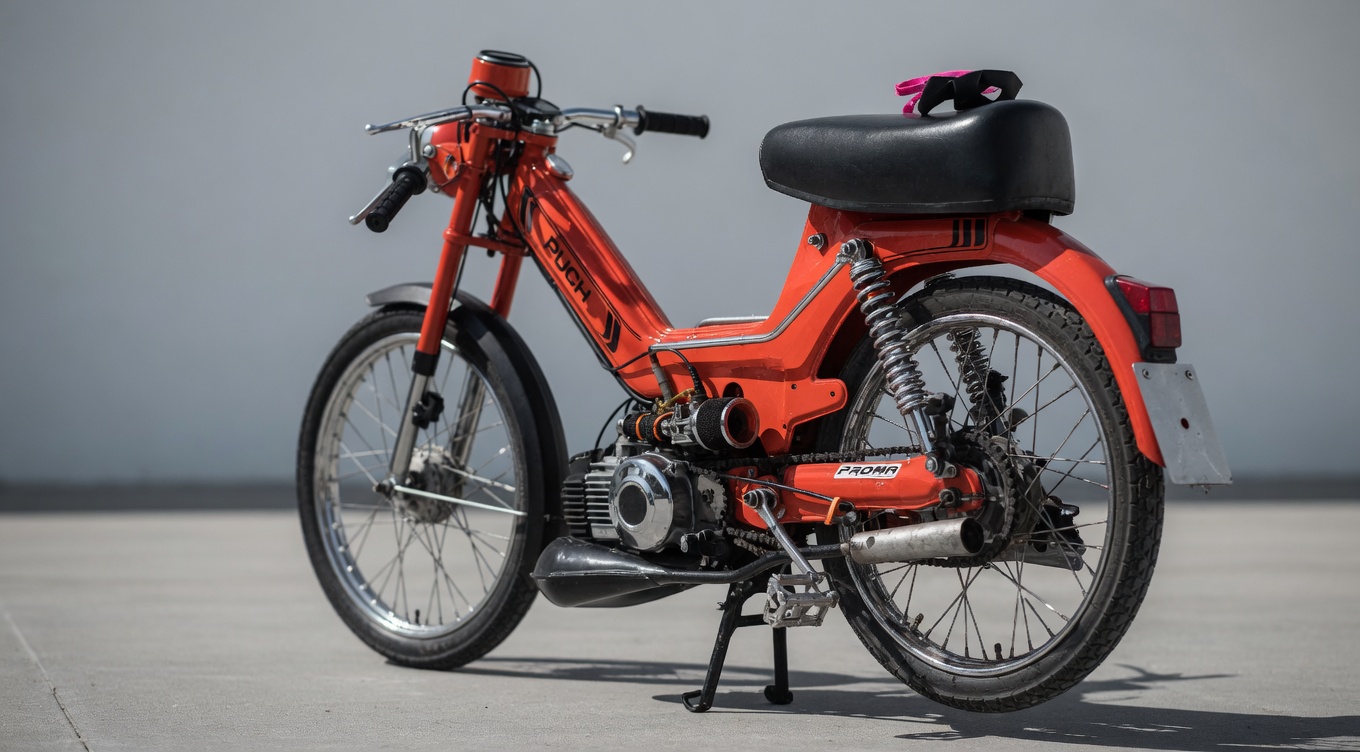
The Puch Maxi arrived in 1969 from Graz, Austria, and became the default US moped — on the order of ~1.8 million built before production wound down. A sturdy pedal frame plus the bulletproof E50 or ZA50 engine gave campus transport that could be fixed with hand tools. Dealers sold them as cheap transportation; today survivors are project bikes, daily riders, and show pieces.
Newport is the US trim name on many tanks. Mechanically it is the same Maxi family — do not order parts by tank badge alone. American tuning culture centered on the E50: Bing carbs, clutch shoes, expansion chambers, and 70 cc kits. Parts depth is the platform’s superpower: Treatland, 1977 Mopeds, Myrons, and swap-meet frames keep rusty projects alive.
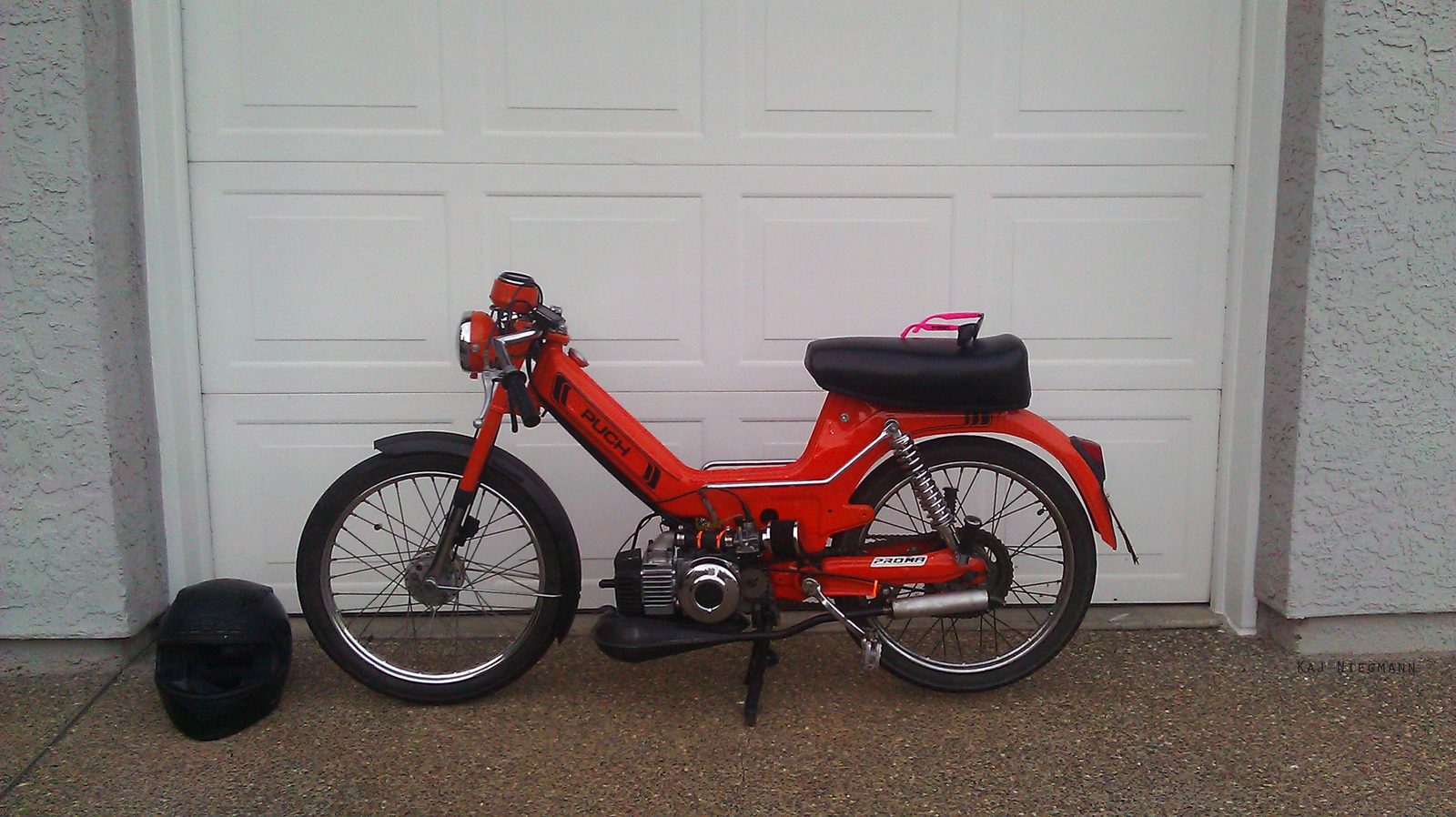
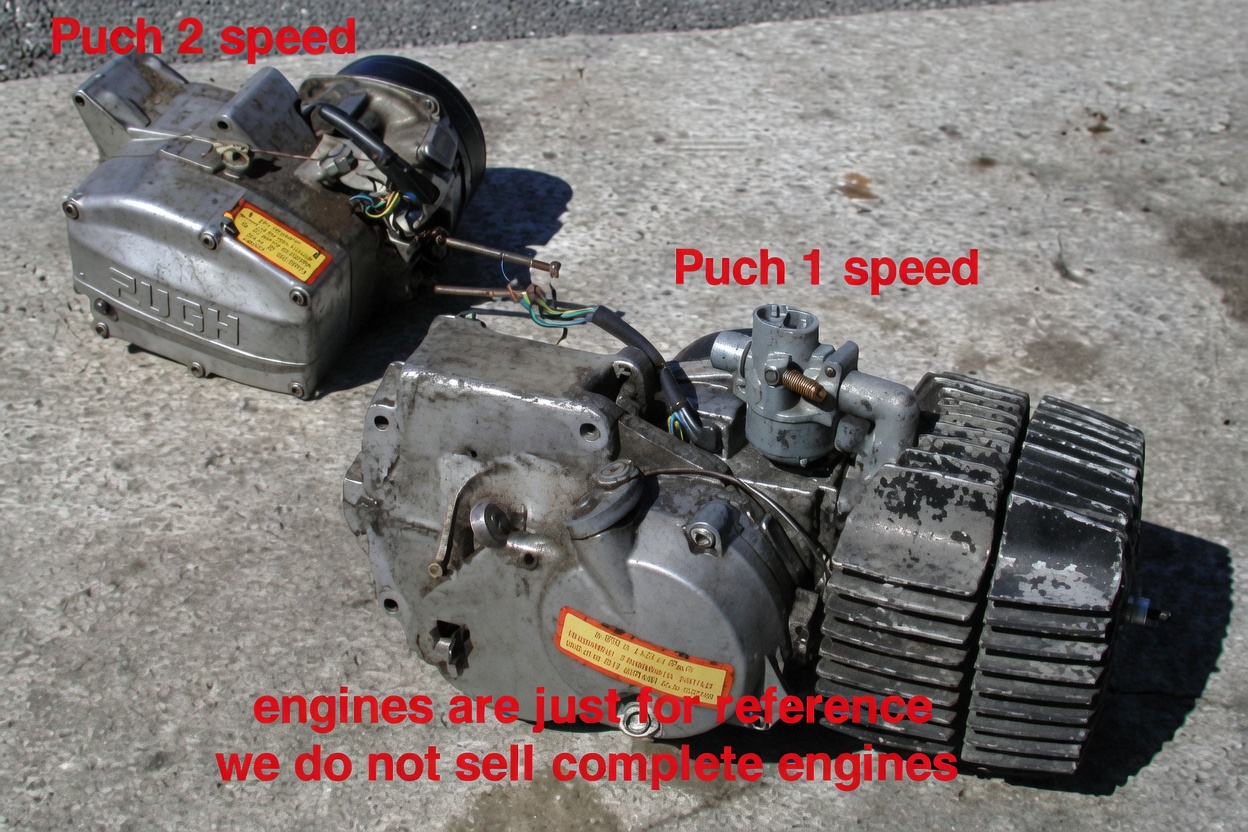
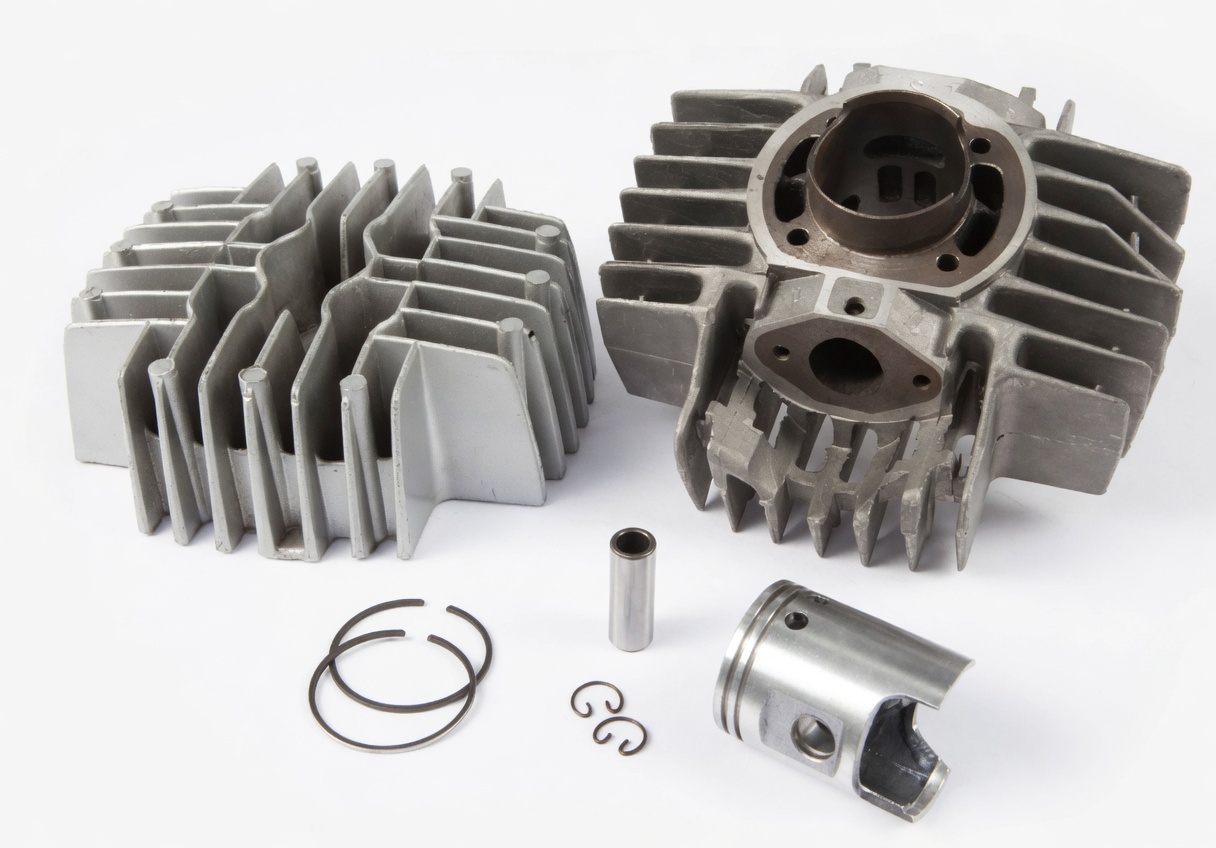
Gallery uses three different assets (street bike, engine ID pair, kit parts). The hero loop is a separate Imagine cinematic still — not repeated below.
E50 vs ZA50 — identify before you order parts
Pop the right-side engine cover and look at the shape:
- E50 — single-speed. One centrifugal clutch in the bell. Left lever disengages for pedal start; shoes grab by RPM. Rounder transmission area; tune shoe weight and springs, not roller weights.
- ZA50 — automatic two-speed inside the cases. First and second engage by internal centrifugal clutches — no shift lever. Cover is noticeably more rectangular. Fluid, pucks, and gear-tooth counts matter as much as jetting.
Both are piston-ported from the factory. Performance reed kits (Polini, Athena AJH, etc.) need case machining — not a bolt-on Stage 2 part. Some ZA50s had oil injection; most US bikes are premix in the tank.
1 HP, 1.5 HP, and 2 HP
Stock speed is roughly ~20 / ~25 / ~30 mph by class. The rating shows up in jets, manifold size, head gasket, and (on ZA50) internal gearing:
- 1 HP — restricted intake port, thick head gasket, small manifold, small jets; ZA50 often taller internal ratios.
- 1.5 HP — 12 mm manifold class, intermediate Bing setup.
- 2 HP — 14 mm manifold, thin/no head gasket, larger jets — factory “open” class.
Puch published a factory 1.5 → 2 HP conversion path (manifold, gasket, airbox pipe, main/slide/needle, exhaust drill pattern). A true 1 HP jug is a different fight — plan cylinder work, not just a jet swap. Details and photos: 1 HP derestrict guide.
Service habits that matter
- E50 clutch — glazed shoes slip no matter what jet you run. Blue springs are a common floor for piped street builds; shoe weight changes grab RPM.
- ZA50 trans — correct ATF, fresh shift pucks, and matched 1 HP vs 2 HP gear clusters. Wrong fluid or mixed tooth counts ruin shift quality.
- Bing jetting — know your carb size and HP class before copying forum jets. Air leaks at the manifold mimic lean symptoms.
- Timing — set with a light off a real TDC mark (flywheel rim ≈ 1 mm per degree). Stock E50 often ~14–17.5° BTDC; ZA50 advance direction is reversed vs E50.
- Premix — commonly ~50:1; richer on kits. See the oil mix calculator.
Buying used
- Confirm E50 vs ZA50 (cover shape / one clutch vs two-speed behavior under load).
- Read the data plate for HP class; assume 1 HP is restricted until you see the jug and manifold.
- Compression warm vs a known-good runner; listen for exhaust leaks; check chain/sprockets and frame rust at seat tube and down tube.
- Budget clutch shoes or ZA50 fluid/pucks, plug, fuel lines, and a Bing clean on any “runs good” ad.
- Title/VIN match — campus bikes often have messy paperwork.
Performance paths
Mild derestrict + jetting, mid 70 cc kit + pipe + clutch, wild reed/port work — staged parts lists live in the build database. Match pipe peak RPM to clutch grab and jetting; do not start with a race pipe on a restricted 1 HP jug.
FAQ
- What is the difference between a Puch E50 and ZA50?
- The E50 is a single-speed engine with one centrifugal clutch. The ZA50 is an automatic two-speed with internal clutches and a more rectangular cover. Both are stock piston-port.
- Is Newport different from Maxi?
- Newport is the common US trim name on many tanks. Mechanically it is the same Maxi family — confirm E50 vs ZA50 and HP class before ordering parts.
- What premix ratio should I run on a Puch Maxi?
- Stock Puchs commonly run about 50:1 with quality synthetic two-stroke oil. Kitted and break-in builds often run richer (for example 32:1–40:1).
- How much does a Puch Maxi cost?
- US project and running bikes often fall roughly in the $500–$1,400 range depending on condition, title, and how restricted the top end still is.