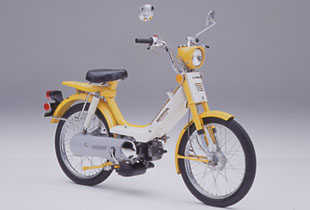
Honda's 49cc mopeds are the default answer when someone says "I don't want to premix gas." The NC50 Express (1977–1983) and PA50II Hobbit share the oil-injected two-stroke philosophy but differ in frame, bodywork, and parts — don't treat them as identical bikes in a parts search.
NC50 Express vs PA50II Hobbit
| NC50 Express | PA50II Hobbit | |
|---|---|---|
| Era | Late 70s–early 80s commuter look | Earlier "step-through" Hobbit styling |
| Pedals | Foot pegs (not functional pedals) | Foot pegs |
| Oil system | Automatic oil injection | Automatic oil injection |
| Culture | Common US survivor | Collector favorite, harder to find clean |
Both use a centrifugal clutch and chain final drive — same as Puch and Tomos. See maintenance checklist for chain models.
Oil Injection — How It Works & What Fails
No premix in the fuel tank. Oil lives in a separate tank; a pump meters oil into the intake based on throttle/rpm. When it works, it's brilliant. When it doesn't, you seize a cylinder fast.
- Check oil delivery — cable-driven pumps need correct cable adjustment. A disconnected or stuck pump cable = riding on straight gas.
- Clogged oil lines — old rubber lines collapse internally. Replace lines and verify flow into the carb boot.
- Stale oil in tank — bikes that sat for years need the oil tank cleaned, not just topped off.
- Smoke on startup — some smoke is normal; billowing blue smoke after warm-up suggests over-oiling or a stuck pump.
Clutch Bell & Ramp Wear
Honda uses a ramped clutch (pads/weights) different from a Puch E50 centrifugal clutch — still chain final drive, not a scooter belt CVT. Common symptoms:
- Low top speed with high RPM — glazed clutch pads or worn ramp plate.
- Shudder on takeoff — worn weights or contaminated transmission oil.
- Transmission oil — use the correct weight; wrong oil changes engagement RPM.
Compression & Buying Used
Honda engines are durable but not magic. Compare compression to a known runner — tired bikes read lower, and a universal "120+ PSI" rule misleads buyers. Below ~90 PSI warm on a healthy gauge warrants top-end inspection. Always verify oil pump operation before paying premium prices for "low miles."
What to Pay (Rough US Market)
Running NC50: roughly $800–$2,500 depending on rust, title, and oil system health. Clean Hobbits often command more in collector markets. Project bikes: $200–$600 if you're honest about seized carbs and stuck pumps.
Not a Tuning Platform
Honda mopeds reward maintenance, not pipe-and-jet fantasies. If you want 40+ mph builds, buy a Puch. See Puch guide and jetting guide for that path.
Identity before parts
NC50 Express and PA50II Hobbit both oil-inject and both run chain final drive with a centrifugal clutch — but frame, body panels, tanks, and many wear parts do not swap blindly. Order by year and model code, not by “Honda 50 moped” search results.
- Oil injection: separate oil tank + pump into the intake. Stock setup is not premix in the gas tank.
- Drive: chain to the rear — not a scooter belt CVT. Don’t import scooter “variator kit” language into parts carts.
- Clutch: ramped pad/weight clutch behavior (engagement RPM, shudder, glazed pads) — different from a Puch E50 bell, and different from Tomos two-speed pucks.
Oil pump buy / first-fire checklist
Stolen from the hard lessons on the oil pump issues page — verify delivery before you celebrate compression:
- Oil tank has clean oil (not varnish sludge from a decade of sit).
- Pump cable moves freely with throttle; nothing disconnected or seized at the pump arm.
- Oil lines are soft, not collapsed; no dry joints at the intake boot.
- After a short run, look for wetness at the delivery point — dry after a ride is an emergency, not a quirk.
If the pump is dead and you must move the bike, that is a temporary emergency premix plan with eyes open — then fix or replace the injection system. Do not treat “I’ll just premix forever” as the stock design.
Service rhythm
- Every ride: oil tank level visible; kill works; no active fuel on rubber.
- Frequent: chain clean/lube/slack; clutch engagement feel; plug color.
- After long sit: carb clean, fresh fuel, oil tank flush if contaminated, confirm pump flow before highway hopes.
- Transmission oil: use the weight your manual calls for — wrong oil changes clutch engagement RPM and can fake “worn pads.”
Carb and fuel (stock path)
Honda mopeds reward clean fuel systems more than jet chasing. Ethanol-stale gas and varnish in the bowl cause more “won’t start” tickets than pipe dreams.
- Drain and clean the bowl; replace brittle fuel line; fit a clean inline filter if the tank sheds rust.
- Confirm spark and oil delivery before rejetting.
- For general two-stroke diagnosis order, use won’t start and no spark.
Buying used — what “low miles” hides
- Compression number alone can look fine while the oil pump is dead — verify delivery.
- Ask how it was stored; stuck pumps and collapsed lines love garage queens.
- Listen for clutch shudder on takeoff; budget pads/weights/transmission oil if it chatters.
- Price bands on this page are market framing, not appraisals — title and rust still rule.
Want speed builds? This platform is a maintenance bike. For pipe-and-kit culture, start at the Puch Maxi guide or Tomos A35 guide.
When something’s wrong
- Oil pump issues — cable, lines, tank; seize risk if ignored
- Won’t start / No spark
- Clutch slip / won’t pull — ramp/pads/weights, transmission oil
FAQ (quick)
- Do I premix an Express? Stock NC50/PA50II use oil injection. Fix the pump — don’t treat it like a premix Maxi as the primary plan.
- NC50 vs PA50II? Same oil-injection philosophy; different frame/body/parts. Don’t assume bolt-on interchange — see identity notes above in this guide.
- Buying tip: Verify oil delivery before you pay “low miles” money. Compression alone lies.