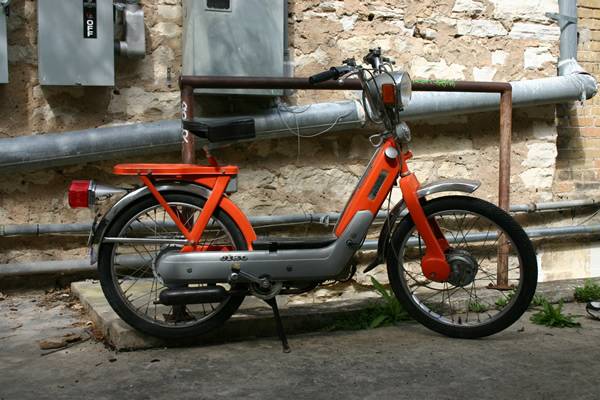
The Piaggio Ciao is a pedal moped — step-through frame, 49cc two-stroke, and actual pedals. It is not a Vespa scooter (PX, Primavera, etc.). Piaggio also made scooters; we cover those on our moped vs scooter page only to explain the difference.
Millions were sold across Europe as commuter transport. The Ciao and related Bravo models are increasingly collectible — especially original paint examples. US imports exist but are less common than Puch or Tomos; expect to source parts through EU sellers and specialty shops.
Why collectors want them
- True pedal moped architecture (not a belt CVT scooter)
- Piaggio and Minarelli engine variants depending on year — verify before ordering cylinders, carbs, or electrics
- Iconic Italian commuter design — distinct from Vespa scooter culture
- Light, simple machines that reward careful restoration over heavy “kit” builds
Engine & parts notes
Ciao/Bravo families span multiple years and markets. Before you order a kit or carb, confirm the engine stamp and whether you have a Piaggio or Minarelli top end. Mixed listings online often use “Ciao” as a catch-all for any small Piaggio step-through — photos and part numbers beat badging alone.
Premix in the tank on most examples (unless someone fitted oil injection later). Stock jetting and exhaust restrictions vary by country; treat forum jet numbers as starting points only and verify with plug color after a clean rebuild.
Buying a used Ciao or Bravo
- Confirm it is a pedal moped, not a modern Piaggio scooter with similar styling language.
- Check frame rust at the step-through and engine mounts; many sat outdoors in Europe.
- Spin the wheels, check chain/sprocket wear, and verify the engine turns with compression.
- Budget gaskets, fuel lines, cables, and a carb rebuild on any long-stored import.
See the Ciao / Bravo model page, the full buying guide, and manuals when available.